Table of Contents
Scalping is a trading strategy focused on making many small profits over short time frames. Scalpers often enter and exit trades within minutes and sometimes seconds. Because scalping trades are so frequent and short-lived, you cannot afford to sit through a significant loss. This makes stop loss placement one of the most important aspects of scalping.
If you don’t know where or how to place your stop loss when scalping, you can end up losing more than you planned, or worse, losing your whole trading capital.
This guide is written to help you understand, calculate, and apply stop loss strategies so you can scalp with confidence in forex, stocks, crypto, indices, or futures.
What Is a Stop Loss and Why It Matters in Scalping
A stop loss is an order you place with your broker to automatically close a trade if price moves against you to a certain level. For scalping, this level is usually tight because the strategy depends on limiting losses and capturing small profits.
Stop loss helps with:
- Limiting downside risk
- Protecting trading capital
- Preventing emotional decisions during live trading
- Improving risk to reward ratio
In scalping, you may have a very high number of trades with small profits. Without proper stop loss placement your losses might overwhelm those gains.
The Difference Between Scalping and Other Trading Styles
Trading style affects stop loss placement. Here’s a comparison:
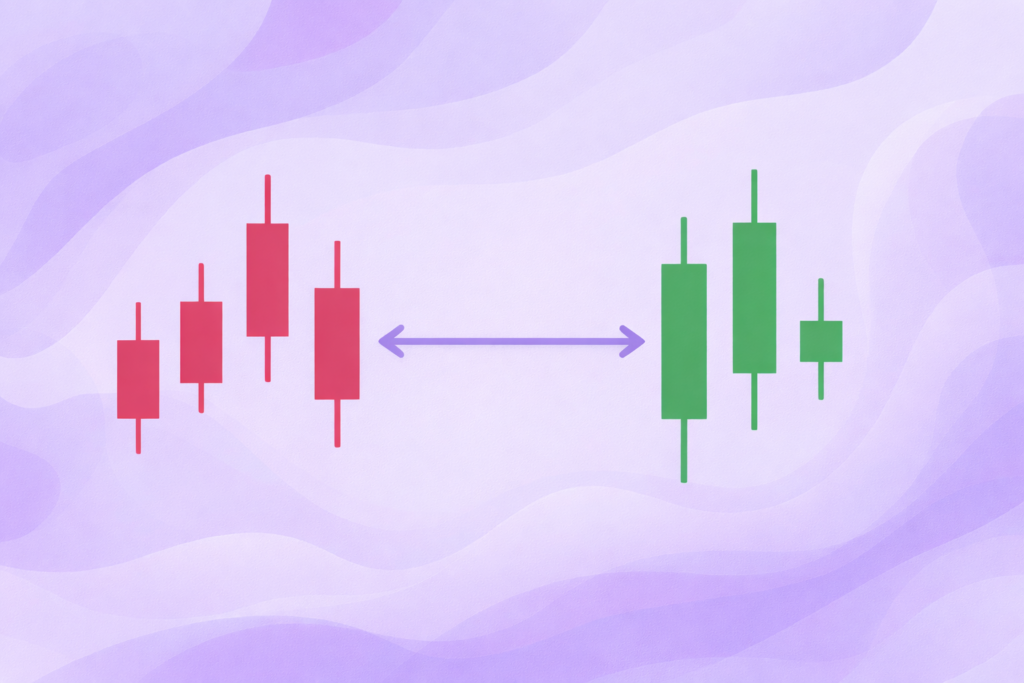
Stop loss scale Comparison
| Style | Typical Stop Loss Size | Trade Duration | Primary Goal |
|---|---|---|---|
| Scalping | Very tight (5 to 15 pips in forex or equivalent) | Seconds to minutes | Small frequent gains |
| Day Trading | Moderate (15 to 50 pips or equivalent) | Minutes to hours | Intraday moves |
| Swing Trading | Larger (50 to 200+ pips or equivalent) | Days to weeks | Capture larger trends |
| Position Trading | Much larger | Weeks to months | Long term trend profits |
This table shows why scalping needs far tighter stop losses: you are trading small movements and do not want to give up more than a tiny part of your capital on each setup.
Core Principles for Setting Stop Loss in Scalping
Stop loss placement is not random. It should be logical and based on market structure and volatility:
- Volatility assessment
Scalpers need tight stops, but not so tight that normal market noise triggers them unnecessarily. Markets move every second. A stop loss that is too tight will frequently close trades prematurely. - Support and resistance levels
Placing a stop loss just beyond a significant level makes sense because if price breaks that level, the trade idea may be invalidated. - Average True Range (ATR) method
ATR is a technical indicator that measures market volatility. For scalping, different multipliers of ATR help you estimate realistic stop distances. - Risk tolerance and account size
Your stop loss should be based on how much you are willing to risk. A common guideline is to risk no more than 1 to 2 percent of your total trading capital on a single trade.
How to Calculate a Stop Loss Using Average True Range (ATR)
The ATR indicator shows average price movement over a selected period. For scalping, a short ATR period like 7 or 14 is common.
Stop loss calculation using ATR
Stop loss = Entry price minus (ATR value × factor)
Example in forex:
- ATR 1 minute or 5 minute = 5 pips
- Multiplier = 1.5
- Stop loss = 5 × 1.5 = 7.5 pips
This means your stop loss should be around 7 or 8 pips from your entry price. Adjust the multiplier based on how much room you want to give price to move naturally.
Steps to Set Stop Loss for Scalping
Follow this step-by-step plan when placing your stop loss orders.
Steps
- Identify the market you are scalping (forex, stock, crypto, etc.)
- Determine the direction of your trade (long or short)
- Observe recent price swings
- Use ATR to estimate typical volatility
- Find the nearest support/resistance level
- Place your stop loss just beyond that level or ATR distance
- Ensure the risk on the trade fits your overall risk rules
- Enter the trade and manage actively
This process ensures your stop loss is both disciplined and responsive to market context.
Example Stop Loss Setups
Example in forex:
- You decide to scalp EUR/USD
- ATR (5-minute chart) is 6 pips
- Support level is 12 pips below entry
- Your stop loss could be placed at 12 pips because it matches a structural level
- OR use ATR multiplier: 6 pips × 1.5 = 9 pips
Example in crypto:
- ETH/USD 1-minute chart
- ATR = 0.3% of price
- Use 1.2 × ATR = 0.36% stop loss
Different markets move at different speeds, so adjust accordingly.
How to Set Stop Loss in MetaTrader 4 and MetaTrader 5
Here is how you place stop loss orders on MT4 and MT5.
Steps in MT4/MT5
- Open your platform and click on the chart of the instrument you want to trade
- Open a new order window
- In the stop loss box, enter the price level where you want your stop loss
- Confirm and place the trade
On both platforms, you can also drag your stop loss order on the chart after opening a position to adjust it manually.
Stop Loss Mini Calculator
You can use this logic to calculate your stop loss distance quickly:
Input fields
Entry price
ATR value
Multiplier
Support/resistance cushion distance
Stop loss = Max of (ATR × multiplier, support/resistance cushion)
Example
Entry price: 1.2000
ATR: 5 pips
Multiplier: 1.5
Support cushion: 10 pips
ATR component = 7.5 pips
Support cushion = 10 pips
Final stop loss = 10 pips (because it is larger and respects a structure level)
The Role of Spread in Stop Loss Placement
Spread refers to the difference between the buy and sell price. For scalpers, wide spreads cost more and affect where you place your stop loss.
If spread is 2 pips and your stop loss is 7 pips, the effective risk becomes 9 pips for a long position (because you enter at ask and exit at bid).
Always account for spread when calculating stop loss distances.
Common Mistakes in Scalping Stop Loss Placement
Traders often make these stop loss errors:
- Placing stop loss too tight without considering normal volatility
- Ignoring structural levels in the chart
- Setting random stop loss levels without a method
- Moving stop loss farther after a losing trade
- Not accounting for spread
Avoid these by using logical, rule-based stop loss placement.
Adjusting Stop Loss During a Trade
Scalping is fast, but there are moments when adjusting your stop can protect gains:
- If price moves significantly in your direction, you can move stop loss to break even
- Use trailing stop loss to protect profits
- Avoid moving stop loss in the opposite direction once the trade is active
Only adjust stops based on plan, not emotions.
People Also Ask
-What is a good stop loss for scalping?
A good stop loss for scalping is typically small relative to market volatility, often between 5 and 15 pips in forex or an equivalent percentage move in other markets, based on ATR, support/resistance, and risk tolerance.
-Should stop loss be tight when scalping?
Yes, stop loss should be tighter than other trading styles, but not so tight that normal market noise triggers it repeatedly.
-Can you scalp without a stop loss?
Scalping without a stop loss is extremely risky and can lead to significant drawdowns because rapid market changes can incur unexpected losses.
-Where should I place stop loss in crypto scalping?
Use recent price structure and short‑term volatility like ATR on 1 minute or 5 minute charts to determine stop loss levels.
-How much should I risk on each scalping trade?
A common guideline is no more than 1–2 percent of your total capital per trade.
Scalping Stop Loss Checklist
- Confirm your trading style qualifies as scalping
- Check current spread
- Look at ATR value on relevant time frame
- Identify support and resistance levels
- Calculate stop loss distance
- Ensure risk fits your rules
- Enter trade with stop loss set
- Monitor and adjust only according to plan
Scalping requires fast decisions and disciplined risk management. A well‑placed stop loss protects your capital, manages risk, and allows you to scalp consistently without emotional trading mistakes. Use volatility measures, chart structure, and a clear process to calculate your stops. With practice and discipline, your stop loss strategy will become a reliable part of your scalping success.