How to Avoid Fake Wallet Apps Before Importing Your Seed Phrase
To avoid fake wallet apps before importing your seed phrase, always use official sources, verify the developer, test the app thoroughly without importing a seed phrase, and never trust seed phrases shared publicly (such as in YouTube comments or forums). Fake wallet scams target inexperienced users by mimicking legitimate wallets and offering “free funds” or easy access. If you import a seed phrase you did not generate yourself, you risk immediate loss of funds and potential theft.
Understanding Seed Phrase Scams
A seed phrase is the master key to a cryptocurrency wallet. It controls access to all assets in that wallet and should be protected at all costs. If someone else sees your seed phrase, they effectively control your wallet.
What Is a Seed Phrase Scam?
A seed phrase scam refers to any fraudulent scheme designed to trick you into revealing, importing, or using a seed phrase in a malicious context. Scammers use social engineering, fake wallet apps, and deceptive comments or posts in hopes that victims will import a seed phrase that appears to contain funds.
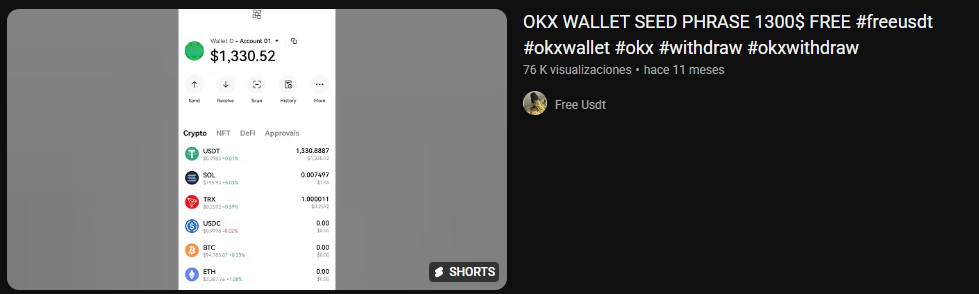
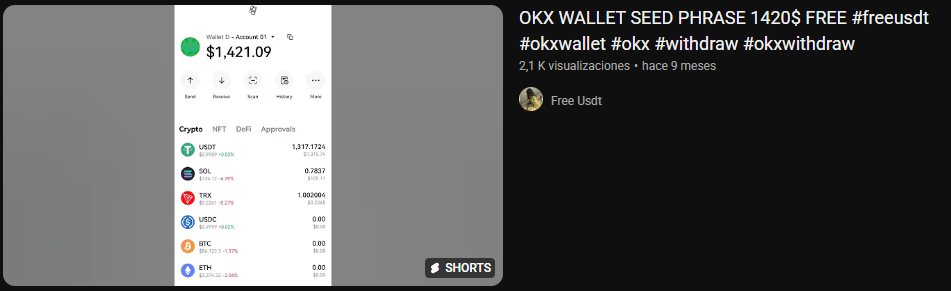
In some cases, scammers publicly post seed phrases in places like YouTube comments or social media with messages suggesting that the wallet holds funds waiting to be withdrawn. These are traps.
Why Seed Phrases Are Targeted
What makes seed phrases such a lucrative target is their universality and power. There’s no intermediary, there’s no customer support desk, and there’s no “reset password” button. A seed phrase provides instant access to a wallet and that’s why scammers focus on them.
Seed phrases are designed to be private and secure. Anyone who gets them gains full control of the wallet. A scam that tempts a victim into importing a seed phrase into a fake wallet can instantly drain the victim’s funds.
Common Seed Phrase Scam Categories
Seed phrase scams often fall into a few patterns:
YouTube comments with “free money” seed phrases: A scam format that encourages users to import publicly posted seed phrases.
Seed sharing in Telegram or Discord: Messages urging users to “help transfer funds” using a provided seed.
Compromised or fake wallet apps: Malicious software that collects seed phrases and transmits them to attackers.
Understanding these patterns is essential to avoid becoming a victim.
What to Do Before Importing Any Seed Phrase
Before you ever paste a seed phrase into a wallet app, ask yourself: Is this a legitimate situation?
If you didn’t generate the seed phrase yourself in a safe environment, you should never import it.
Step 1: Verify the Download Source
Always use:
The official project website
A verified Google Play or Apple App Store page
A well-known and audited repository
Do not install wallet apps from:
Links in comments
Direct messages
Forums or unsolicited ads
Unknown third‑party app stores
Step 2: Verify the Developer Identity
Look for:
A clear developer name that matches official branding
A history of published apps
A consistent company or open‑source identity
Fraudulent apps often lack a verifiable identity or have generic/anonymous developers.
Step 3: Review Community Feedback
Reviews on app stores
Discussions on crypto forums (Reddit, Bitcointalk)
Mentions on reputable crypto communities
Words like “scam,” “fake,” or “stolen seed” in reviews are major red flags.
Step 4: Test the Wallet First
Before importing a seed phrase:
Open the app and explore its interface
Create a new, empty test wallet
Check permissions and see if anything feels suspicious
Never enter a sensitive seed phrase until you’re sure the app behaves as expected.
How Fake Wallet Apps Work
Fake wallet apps are designed to look like real wallet software but are built with malicious intent.
What Is a Fake Wallet App?
A fake wallet app typically:
Copies the interface of popular wallets
Mimics icons and branding
Appears in app stores or on unofficial websites
Requests seed phrases under false pretenses
The goal is to extract the seed phrase or private key from users and transmit that data to a remote server controlled by scammers.
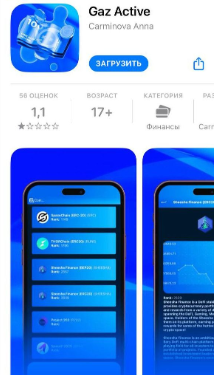
This is a scam app in the app store:
Common Fake Wallet App Tactics
Fake wallets may:
Ask for seed phrases repeatedly or early in the setup process
Request unusually broad permissions on your device
Include spyware functions hidden behind a wallet UI
Connect to malicious smart contracts
Importing your seed into such an app can give attackers instant access to your crypto holdings.
Fake Wallet App Red Flags
When evaluating a wallet app, watch for:
Generic or misspelled names
New developer accounts with no history
Poor or inconsistent grammar in app descriptions
Apps found through unverified links
Requests for sensitive information beyond what’s needed
What Happens If You Use Someone Else’s Seed Phrase
Understanding the consequences of importing a seed phrase that’s not yours is important. Many people assume that if they find a seed phrase, it must be a gift left behind by someone else. In reality, this is almost never the case.
Immediate Risks
If you import a seed phrase that:
Was publicly shared
Was provided by an unknown person
Was linked in a comment or ad
Was included inside a fake wallet app
then you risk:
Instant theft of any funds you add If you attempt to transfer tokens, the gas you pay may go directly to the scammer.
Exposure of your real seed phrase A fake wallet may log every seed you input and relay it to criminals.
Malware or ongoing monitoring Some fake wallets install persistent code that watches for future activity.
Why “Free Crypto” Is Never Real
In legitimate crypto infrastructure, no one can forget or “leave behind” unclaimed funds that are freely available. A wallet address with assets is typically controlled by someone who has secure access. If those funds truly belonged to the original owner, they would not be publicly shared as a seed phrase.
Any offer of “free crypto” is designed to exploit a psychological vulnerability: people want easy money.
Seed Phrases in YouTube Comments and Public Platforms
The YouTube Seed Phrase Scam Explained
One of the most widespread scams in recent years has been seed phrases posted in the comments of YouTube videos especially those that cover “crypto giveaways,” “passive income,” or “free money tips.”
A typical scam comment might look like:
“This wallet has ETH! Use this seed to claim it: ABCD … XRP … ETH inside!”
Unsuspecting users copy the words, open a wallet app, paste the seed, and then immediately see a balance. This mocked appearance of validity invites the user to “transfer” funds usually by paying a small gas fee.
But the scam is structured so that:
The wallet is under attacker control
Any gas you pay is siphoned
The visible balance may be fake
This is not generosity it’s a trap.
Why Publicly Shared Seed Phrases Are Always Fake
There are no legitimate reasons for someone to post their seed phrase publicly. A seed phrase should never be stored online, or shared with anyone.
If it’s being shared:
It’s part of a scam funnel
The wallet is controlled by someone else
The posted seed is fake or compromised
Never trust a seed phrase you find in a comment, forum thread, or chat.
What to Do If You Already Imported a Seed Phrase into a Fake Wallet
If you realize you’ve imported a seed into a suspicious app, act quickly.
Immediate Damage Control
Disconnect the device from the internet This prevents potential exfiltration of data.
Uninstall the app immediately Don’t interact further.
Do not add funds Adding funds can expose more of your crypto to loss.
Move genuine funds immediately If you imported your real seed phrase, assume compromise and import into a known legitimate wallet instead.
Reporting Suspected Scams: Taking Action
If you encounter a fake wallet app or seed phrase scam, reporting helps protect others.
Report the App to App Stores Use the “Report” feature to flag malicious or impersonation behavior.
FTC (Federal Trade Commission): Report general online fraud at https://www.ftc.gov/
You’re Local Police Department: It refers you to the Security Forces to file a complaint.
Notify Blockchain Communities Discord, Telegram, and other groups help broadcast scam alerts to the community.
Common Red Flags of Fake Wallet Apps
Here are frequent warning signs:
Constant requests for your seed phrase
Inconsistent interface compared to the official wallet
Unusually broad permissions
Promises of “free crypto”
Links shared in comments rather than official channels
Best Practices for Seed Phrase Safety
Only Use Your Own Seed Phrase
If you didn’t generate it yourself, treat it as completely unsafe.
Store Seed Phrases Offline
Avoid digital storage in places that can be compromised. Use offline backups or hardware storage.
Avoid Screenshots or Cloud Storage
Screenshots and online backups are easily hacked or synced to clouds.
Use Reputable Wallets Only
Choose wallets that are open source, widely reviewed, and trusted by the community.
Enable Additional Security Layers
Where possible, use hardware wallets or multi‑factor authentication.
Frequently Asked Questions
Can a Wallet App Steal My Funds if It Has My Seed Phrase?
Yes. Anyone with your seed phrase has full control and can move funds instantly.
Is It Safe to Import a Seed Phrase You Found Online?
No. A seed phrase found online is almost always compromised.
What Happens if You Use Someone Else’s Seed Phrase?
You risk losing your funds and possibly installing malware on your device.
Are Seed Phrases Shared in YouTube Comments Real?
No. This is a known scam tactic and should never be trusted.
Should I Ever Try to Retrieve Funds From a Found Wallet?
No. Retrieving funds from an unknown wallet is unsafe and invites theft or loss.
Conclusion
Fake wallet apps and seed phrase scams are designed to exploit emotion, curiosity, and haste. In the world of crypto, your security is your responsibility. If you didn’t generate the seed yourself and verify every aspect of the wallet app first, do not import it.
By following the steps outlined here verifying sources, testing apps before use, reporting scams, and using best practices you protect not just your assets, but the broader crypto community.
Your seed phrase is the key to your financial sovereignty treat it with the seriousness it deserves.