Yes, Some Stablecoins Can Be Frozen
Yes. Stablecoins such as USDT and USDC can be frozen by their issuers or in response to legal and regulatory actions. These are centralized stablecoins, meaning a company controls key functions, including the ability to restrict or block addresses. Not all stablecoins work the same way, and understanding how freezing works helps you manage risk and protect your funds.
Table of Contents
What Does “Freezing” a Stablecoin Actually Mean?
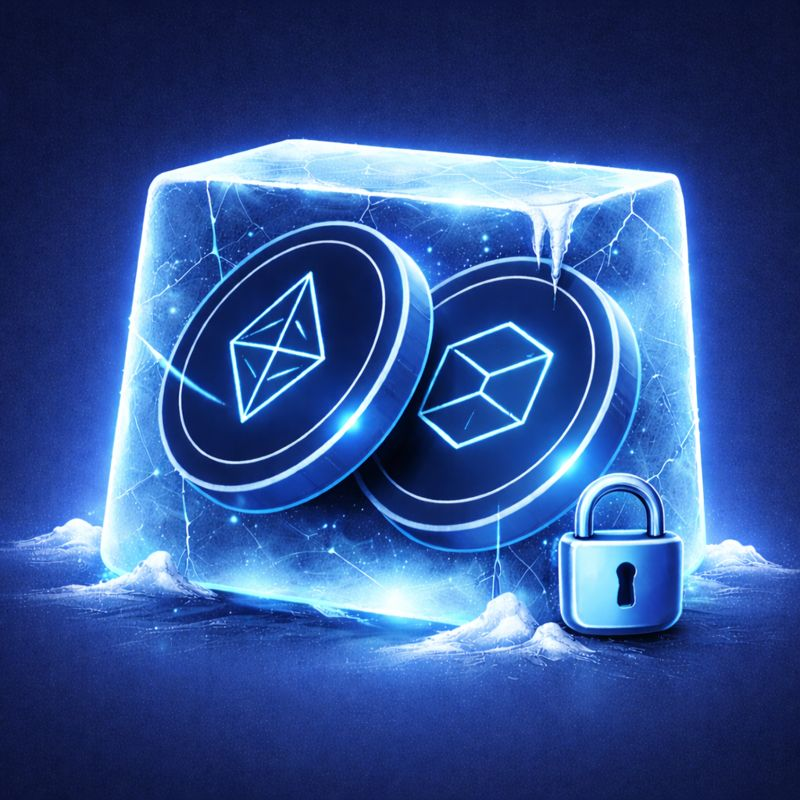
“Freezing” a stablecoin refers to the ability of the issuer or regulator to halt transfers out of a wallet address or block specific funds. Technically, this happens because the stablecoin contract includes admin functions that can change the status of an address or token balance.
Practically, when an address is frozen:
- You cannot send or transfer the stablecoin from that address.
- Your balance remains visible on‑chain, but it is immobile until unfrozen (if ever).
- Depending on the platform or blockchain, even conversion or spending may be restricted.
This is not a failure of the blockchain itself but a constraint embedded into certain stablecoin protocols due to their centralized design.
Why USDT and USDC Can Be Frozen
Centralized Control Over Issuance and Redemption
USDT and USDC are controlled by companies (Tether and Circle, respectively). These firms maintain the master controls of smart contract functions that can restrict certain addresses or transactions under specific conditions. That is what people mean when they say “centralized control” a single authority can intervene at the token level.
This is very different from fully decentralized cryptocurrencies like Bitcoin, where no company controls transaction flows or balances.
Regulatory and Legal Compliance
Because USDT and USDC operate under legal jurisdictions and must comply with the law, they can be required to freeze funds in response to regulatory directives. This includes anti‑money‑laundering (AML) rules, sanctions enforcement, or court orders.
This capacity is part of compliance with financial laws that govern entities issuing financial instruments, even in blockchain form.
Sanctions, Blacklists, and Law Enforcement Requests
One practical scenario where freezing occurs is when an address is added to a government or sanctions blacklist. For example, if the U.S. Treasury’s Office of Foreign Assets Control (OFAC) designates an address for sanctions, Circle and Tether can disable transfers from that address to comply with legal requirements.
This is not hypothetical there are real cases where stablecoin issuers have blocked activity on sanctioned addresses.
Fraud, Scams, and Illicit Activity Prevention
Issuers may also freeze addresses linked to known fraud, scams, or theft. In collaboration with exchanges and law enforcement, freezing is used as a tool to prevent further criminal misuse of stablecoin balances.
While intended for safety, this can also pose risks for users who find themselves mistakenly flagged or caught in automated blacklists.
How Stablecoin Addresses Get Blocked or Frozen
Contrary to what many believe, an address is not frozen by the blockchain itself. Here is how the freezing process works in practice:
- Issuers embed admin controls into the stablecoin smart contract that allow privileged accounts to flag or disable certain wallets.
- Regulators or compliance teams issue a directive (e.g., sanctions, law enforcement orders) tied to a blockchain address.
- The issuer updates internal compliance records and executes a contract function to restrict that address.
- Blockchain data remains public, but the smart contract logic prevents outbound transfers.
Because these features are built into the token contract, freezing is not a network consensus change it is a contract‑level intervention that affects only that token’s movement.
Stablecoin Freezing Risk: What You Should Really Know
The risk of having your stablecoins frozen isn’t just a theoretical concern it’s built into the very architecture of centralized stablecoins. If you unknowingly interact with compromised addresses, receive funds from a blacklisted source, or get caught in the path of a flagged transaction, your address may be frozen even if you’ve done nothing wrong.
The freezing risk is highest when:
- Using bridges or DeFi apps that aggregate anonymous flows
- Reusing old addresses linked to prior activity
- Accepting funds from unknown sources
Ultimately, freezing risk is a compliance risk, not a smart contract bug or personal mistake and it’s one that decentralized stablecoins generally don’t carry.
Best DeFi apps:
These are some of the most trusted DeFi apps that combine security, transparency, and proven track records. While they can help you navigate Web3 more safely, always do your own research and before installing any app, make sure it fits your needs, comfort level, and risk profile.
BINANCE
Although Binance is primarily a centralized exchange, it offers access to DeFi features like staking, liquidity farming, and a DeFi wallet. It’s widely used but comes with regulatory considerations depending on your region.

AQRU
AQRU is a yield-generating app designed for users who want to earn passive income on crypto. It focuses on simplicity and offers fixed interest returns, though users should understand how funds are lent out to generate yield.

KRAKEN
Kraken is a secure and long-standing exchange that also provides staking services with a DeFi-like experience. It’s known for its strong compliance and security track record, making it a solid option for more cautious users.

USDT vs USDC Key Differences When It Comes to Freezing
Tether (USDT): Broad Reach, Less Transparency
USDT is one of the most widely used stablecoins globally. It is available on many blockchains, including Ethereum, Tron, and others. Its issuer, Tether, has the ability to freeze balances associated with sanctioned or suspicious activity.
Freezing behavior: Tether’s approach is reactive, driven by compliance updates, and it has historically frozen USDT in addresses linked to known illicit actors.
Despite its broad distribution, Tether’s transparency about freezing decisions and policies has historically been less detailed compared to Circle.
Circle (USDC): Compliance‑First and Faster Freezes
USDC is issued by Circle and is often described as more compliance‑centric. Circle has been explicit about its ability and willingness to freeze funds to satisfy regulatory obligations or prevent misuse.
Freezing behavior: Circle acts quickly when government agencies or compliance teams flag addresses. Because USDC is viewed as a more tightly regulated stablecoin under U.S. law, it may be frozen faster or more consistently in response to compliance directives.
This reflects different corporate cultures and legal contexts rather than fundamental differences in blockchain mechanics.
Real Examples of Frozen USDT and USDC
Government Seizures and Forfeiture Cases
In some documented instances, law enforcement agencies have identified cryptocurrency addresses involved in sanctions violations or criminal schemes. Issuers like Circle or Tether have executed freezes after formal requests from government agencies, effectively preventing further movement of assets while investigations proceed.
These cases demonstrate how blockchain transparency intersects with legal power a public ledger does not mean public control.
Exchange‑Related Freezes and Investigations
Situations also occur where an exchange flags suspicious transactions or wallets and collaborates with issuers to freeze funds for protection reasons. This might happen during suspected hacking, phishing scams, or flow of stolen funds.
Even if you personally did not commit a crime, if your address is associated with a compromised pattern or linked to illicit flows, automated systems can flag and restrict activity.
What Happens to Funds After They Are Frozen?
When funds are frozen:
- You cannot send, trade, or withdraw those stablecoins.
- Funds may remain static until legal review or issuer intervention.
- In some law enforcement cases, funds may be forfeited to authorities.
- In other situations, funds can be unfrozen if errors are resolved.
This outcome depends on the legal framework, issuer policies, and regulatory context not on blockchain consensus.
What to Do If Your USDT or USDC Is Frozen
How to Check If Your Address Is Blacklisted
The first step if you suspect your stablecoins are frozen is to confirm the situation:
- Use public blockchain explorers to check transaction history.
- Look for confirmed transactions that do not move despite valid gas fees.
- Contact the issuer’s compliance team for confirmation and next steps.
Transparent communication from issuers or exchanges can clarify whether a freeze is compliance‑driven or an error.
Can Funds Be Unfrozen? What Are the Realistic Outcomes
Yes, in many cases, funds can be unfrozen if they were flagged erroneously or if the compliance issue is resolved. This typically requires:
- Direct engagement with the issuer’s compliance team
- Relevant documentation proving that your address was flagged mistakenly
- Clearance by regulators or law enforcement
The process is not guaranteed and can take time; success depends on specific circumstances.
When There Is Nothing You Can Do
Unfortunately, in cases involving criminal misuse, sanctions, or regulatory orders, it may be impossible to recover frozen funds. Issuers and governments treat these situations strictly to prevent illicit finance.
This reality underscores the importance of understanding the nature of centralized stablecoins before holding large balances.
Centralized vs Decentralized Stablecoins
What Are Centralized Stablecoins?
Centralized stablecoins are backed and issued by corporate entities that manage redemption, compliance, and supply. USDT and USDC are primary examples: a company stands behind each token, and that company has power over contracts and controls compliance features, including freezing.
What Are Decentralized Stablecoins?
Decentralized stablecoins like DAI, LUSD, and others are backed by collateral pledged in smart contracts. They are designed to be governed by decentralized protocols, with no single entity controlling freeze functions.
This means decentralized stablecoins generally cannot be frozen by a single issuer but they are subject to broader systemic risks (like price volatility of collateral).
Can Decentralized Stablecoins Be Frozen?
In most cases, decentralized stablecoins cannot be frozen because there is no central authority with admin control. However, intermediary services (like bridges, certain wrapped tokens, or exchanges) can impose restrictions but this is different from protocol‑level freezing.
Are Stablecoins Really “Safe”? The Hidden Risks Explained Simply
Stablecoins as Digital IOUs
Centralized stablecoins can behave like digital IOUs you hold a balance based on trust in the issuer. If that issuer or its banking partners face difficulties, the value or usability of the stablecoin may be impacted.
The Illusion of Full Control
Even if you self‑custody your stablecoins, the underlying contract still has embedded compliance controls. Full control over your wallet does not guarantee that the token itself is free from restrictions.
Freezing vs Crashing Different Risks, Same Result
Sometimes stablecoins face depegging events or market stress that causes price instability a different risk than freezing, but one that can be financially just as damaging. Freezing stops movement; crashing impacts value.
How to Reduce the Risk of Having Stablecoins Frozen
Avoid High‑Risk Wallets and Interactions
Do not interact with addresses linked to scams, dark market flows, or suspicious activity. Even accidental associations can trigger compliance flags.
Be Careful With On‑Chain Activity
Sending stablecoins through high‑risk bridges or mixers can expose you to automated blacklists. Choose reputable services.
Self‑Custody Does Not Mean Immunity
Holding tokens in your own wallet increases control, but does not remove issuer‑level compliance controls on freezing.
Common Myths About Frozen Stablecoins
“Stablecoins Can’t Be Frozen If You Self‑Custody”
False. Even if you control the private keys, the token’s contract can still enforce compliance rules.
“Only Criminals Get Their USDT or USDC Frozen”
Freezing decisions can also stem from false positives, regulatory overreach, or address re‑use issues. Not all cases involve illegal activity.
“USDT and USDC Work the Same Way”
While both centralized, Tether and Circle have different compliance policies, issuance practices, and transparency levels leading to different freezing behaviors in practice.
FAQ
Can USDT be frozen in my wallet?
Yes, USDT can be frozen at the contract level if the address is flagged by the issuer’s compliance systems.
Can USDC be frozen by Circle?
Yes, Circle explicitly communicates that it has authority to freeze USDC in response to legal and regulatory requirements.
Can decentralized stablecoins be frozen?
Typically no, because there is no central authority controlling the protocol; however, intermediaries may still restrict access.
Is it safer to hold stablecoins than crypto?
Stablecoins may reduce price volatility, but they do not eliminate custody or compliance risks tied to freezing abilities.
What happens if a stablecoin issuer freezes funds by mistake?
You may be able to work with the issuer’s compliance team to get funds unfrozen, but this process can be slow and is not guaranteed.
What You Should Know Before Holding USDT or USDC
Stablecoins like USDT and USDC can be frozen because they are centralized by design. This capacity exists for compliance, legal, and security reasons and reflects the reality that blockchain transparency does not equal absolute freedom. Understanding these differences helps you make safer choices about where and how you hold stablecoins, how to protect your funds, and what to expect if something goes wrong. If you hold large amounts of stablecoins, consider diversifying risk and learning the policies of each issuer before storing significant value.