Table of Contents
In investing and trading, there are two main paradigms for decision-making: fundamental analysis vs technical analysis in trading. Both share the same goal—anticipating the future price movement of an asset—but they differ radically in methodology. Understanding the difference between technical and fundamental analysis is essential whether you trade stocks, currencies, or fundamental analysis in crypto.
This article breaks down the real value of each approach and shows how to combine fundamental and technical analysis to build stronger, more consistent strategies.
Fundamental analysis: focusing on real value
Fundamental analysis is centered on an asset’s real or intrinsic value. It aims to understand the “why” behind price moves. Instead of starting with charts, fundamental investors analyze economic, financial, political, and industry factors that can influence an asset’s future value.
The main objective is to identify whether an asset is undervalued or overvalued—buying when it’s cheap relative to fundamentals and selling when it becomes expensive. This typically aligns with a medium- to long-term horizon, where structural changes matter more than short-term volatility.
For fundamental analysis in crypto, this means evaluating the project’s real utility, the development team’s track record, product-market fit, partnerships, security history, and tokenomics (supply schedule, inflation, unlocks, emissions, and demand drivers). It also includes on-chain metrics such as active addresses, transaction volume, fees, protocol revenue, TVL (where relevant), and whether growth is organic or incentive-driven.
For fundamental analysis in forex, the lens is macroeconomic. Traders track interest rate expectations and central bank policy (for example, the Federal Reserve and the ECB), inflation trends, labor market data, GDP growth, recession risk, fiscal policy, and geopolitical events. The biggest advantage of fundamental analysis is that it can help you align with major, long-duration trends driven by macro regimes rather than noise.
Extra value: fundamental catalysts and regime changes
A useful way to think about fundamentals is as “regime drivers.” Markets often shift from one regime to another—risk-on vs risk-off, tightening vs easing, high inflation vs disinflation. In those transitions, fundamentals can dominate and technical signals can fail repeatedly. That’s why many professionals use fundamentals to define bias and risk context, even if they execute with charts.
Technical analysis: focusing on price behavior
Technical analysis is built on the idea that “price discounts everything.” In other words, all available information—fundamental, psychological, and supply/demand dynamics—eventually shows up on the price chart.
This approach, popular among technical analysis for beginners, focuses on historical price movement and volume to estimate what might happen next. The core goal is tactical: finding higher-probability entries and exits, often over short- to medium-term timeframes.
Technical traders use a toolbox that typically includes:
- Price action and market structure (higher highs, higher lows; breaks of structure; trend vs range)
- Support and resistance zones
- Moving averages (trend filters and dynamic support/resistance)
- Technical analysis indicators like RSI and MACD (momentum and trend confirmation)
- Volatility tools (ATR, Bollinger Bands) to size stops and avoid random noise
- Chart patterns (triangles, head and shoulders, flags) used as visual frameworks, not guarantees
- Volume analysis (where available) to validate interest and participation
The main advantage of technical analysis is speed and precision. You can define stop-loss and take-profit levels with clear rules and measure risk-to-reward objectively. The main limitation is that charts alone can generate false signals, especially during macro shocks, news-driven repricing, or low-liquidity conditions.
Extra value: technical analysis is not just indicators
A common mistake is thinking technical analysis equals indicators. Many consistently profitable traders rely more on market structure, liquidity zones, and volatility-adjusted risk management than on a complex indicator stack. Indicators can help, but they often lag—price leads.
Fundamental vs technical analysis: which one is better?
When you compare fundamental analysis vs technical analysis, the key insight is that neither is universally superior. Asking “which analysis is better in trading?” is often a false dilemma because they solve different problems.
- Fundamental analysis is best for direction and conviction. It helps you understand what should matter and why the market may trend over weeks, months, or years.
- Technical analysis is best for timing and execution. It helps you decide when to enter, where to place a stop-loss, and how to structure risk.
The most robust professional approach is to combine them: use fundamental analysis for directional bias and scenario-building, then use technical analysis to optimize entries, exits, and risk.
A practical framework to combine both (the professional workflow)
Here is a proven, repeatable workflow that adds real value beyond theory:
- Define the macro and narrative bias (fundamentals)
Ask: What is driving this market right now? Rates, liquidity, earnings, regulation, adoption, risk sentiment? - Identify upcoming catalysts (economic calendar and event risk)
In forex, this includes CPI, jobs data, central bank meetings, and speeches. In stocks, earnings and guidance. In crypto, unlocks, ETF flows, regulatory decisions, or major protocol upgrades. - Translate the bias into scenarios, not certainty
Example: “If inflation surprises higher, rates expectations rise and USD strengthens.” This protects you from being married to a single outcome. - Use technicals to define your trade plan
Pick key levels (support and resistance), confirm with price action, and define invalidation (where your thesis is wrong). - Risk management before entry
Set position sizing based on stop distance and account risk (for example, risking 0.5% to 1% per trade). Good analysis fails without risk control. - Review and refine through journaling and backtesting
Track what worked, what didn’t, and whether your edge was real or random. Backtesting (even simple rule-based testing) helps avoid hindsight bias.
Extra value: match your analysis to your timeframe
A clean rule: the higher your timeframe, the more fundamentals matter. The lower your timeframe, the more microstructure and technicals matter. A day trader can’t ignore the economic calendar, but they also can’t wait for a quarterly thesis to play out. Align your tools with your holding period.
EUR/USD example: combining fundamentals and technicals
Imagine a trader looking for an opportunity in EUR/USD.
Fundamental analysis: determine direction (the compass)
Event setup: The ECB signals a more aggressive tightening path than expected, while US data prints weaker than forecast, reducing the probability of near-term Fed hikes. Interest rate expectations shift.
Fundamental conclusion: The interest rate differential moves in favor of the euro. Capital seeking yield becomes relatively more supportive of EUR than USD.
Decision: The trader sets a bullish bias for EUR/USD over the coming weeks. They decide to focus only on long setups, not shorts, unless the macro picture changes.
Extra value: check confirmation factors
A disciplined macro trader also checks:
- market pricing (what futures and swaps imply about rates)
- risk sentiment (risk-on typically supports EUR more than USD in some regimes)
- correlations (DXY direction, US yields, equity volatility)
This helps avoid being surprised by “priced-in” narratives.
Technical analysis: refine timing
Level identification: On the daily chart, EUR/USD pulls back into a well-defined support zone near 1.0850, a prior structure level where demand previously appeared.
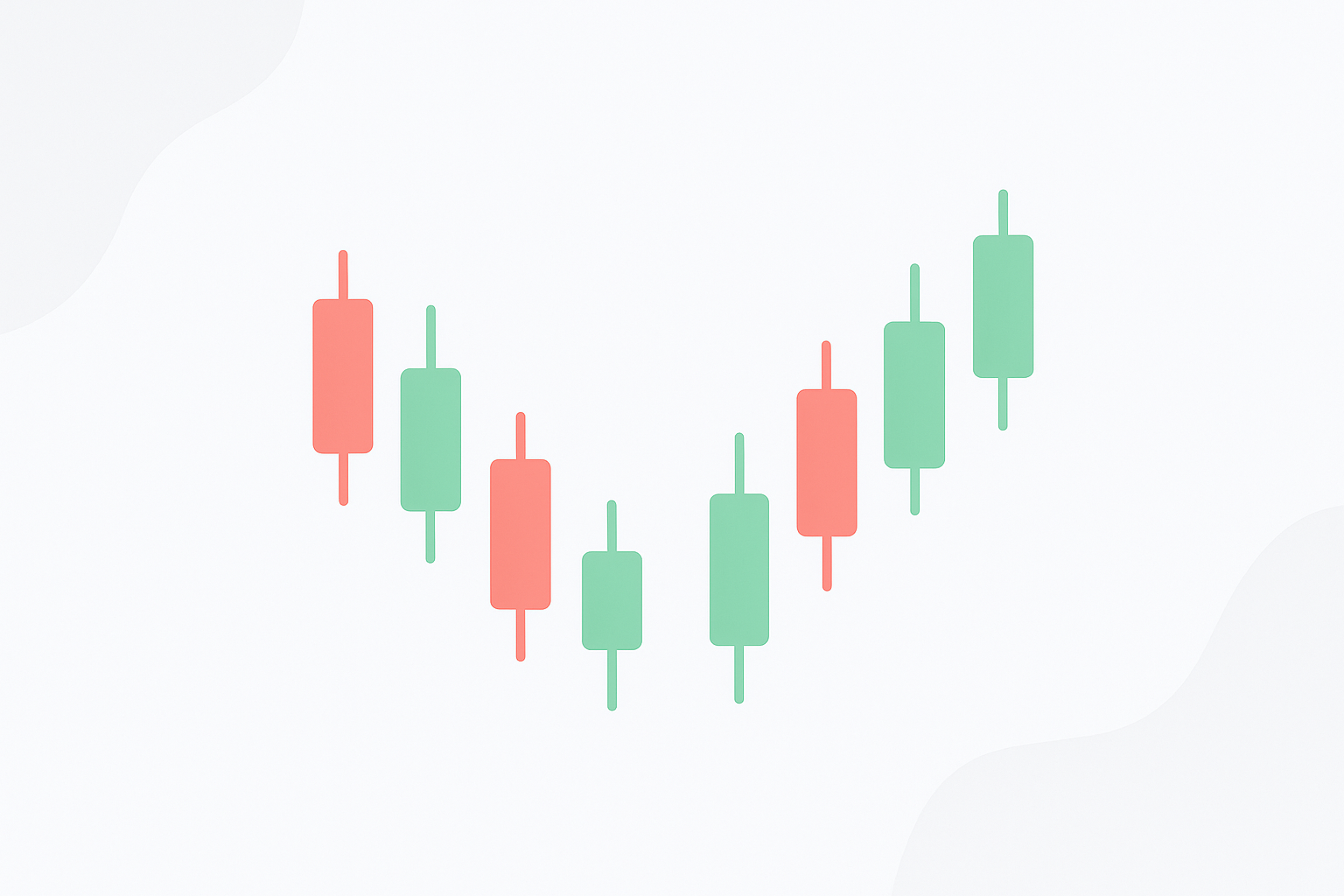
Pattern confirmation: At support, price forms a bullish reversal signal (for example, a hammer or bullish engulfing). RSI is recovering from oversold, suggesting selling pressure is fading. The trader also checks whether the pullback is orderly (no panic expansion) and whether volatility is acceptable.
Execution plan:
- Entry: Long after confirmation closes above support, around 1.0860–1.0880 depending on rules
- Stop-loss: Below the support zone and the reversal low, for example 1.0830, because that level invalidates the bullish setup
- Take-profit: A prior resistance zone (such as 1.1000) or a measured move; alternatively, scale out partial profits and trail the stop using structure or ATR
Result logic: The trader did not buy purely because the ECB hiked (which could lead to chasing), and they did not buy purely because a candle pattern appeared (which could ignore macro risk). Fundamentals defined the direction; technicals optimized entry and risk.
That is how you turn a macro thesis into a measurable trade with clear risk parameters.
Key risks and mistakes traders make with both approaches
Even strong analysis can fail. These are common traps:
- Overconfidence in one signal: one indicator or one headline is not a system
- Ignoring liquidity and news: technical levels can break instantly on major releases
- Mixing timeframes incorrectly: using a 5-minute chart to manage a multi-month thesis
- No invalidation point: if you don’t know where you’re wrong, you can’t manage risk
- Not accounting for volatility: stops placed inside normal noise get hit repeatedly
- Confirmation bias: searching only for data that supports your view
Extra value: when technical analysis tends to outperform fundamentals
Technical execution often has an edge in range-bound markets, mean-reversion conditions, and highly liquid products with stable participation. Fundamentals tend to dominate during macro regime transitions, earnings-driven repricing, policy changes, and liquidity shocks.
Conclusion: the analysis that wins is the one that gives you confidence and discipline
There is no single “best” method. The best approach is the one that matches your psychology, timeframe, and ability to execute consistently.
If you are patient, macro-oriented, and comfortable holding through noise, fundamental analysis can be your anchor. If you prefer fast decision-making, precise risk control, and pattern-based execution, technical analysis may fit you better.
Most experienced traders combine both: fundamentals for direction and context, technicals for timing and risk management. If you are just starting, choose the method that helps you trade with discipline and without fear. Consistency and risk management beat any single technique—and they only become possible when you truly trust your process.